
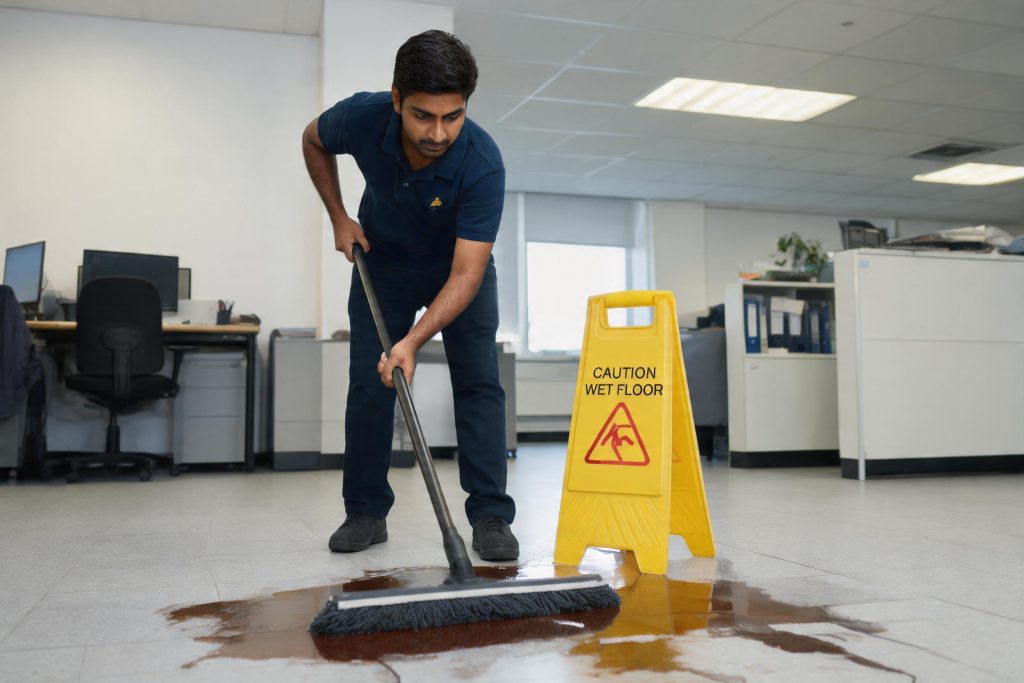
Slips, Trips and Falls: Causes and How to Prevent Them
Slips, trips and falls are the most common cause of workplace injury, and almost all are preventable. The causes, the law, and simple steps to prevent them.
Slips, trips and falls are the most common cause of workplace injury, and almost all are preventable. The causes, the law, and simple steps to prevent them.

Care workers administer medication safely by following the six rights, every time. What the six rights are, who can administer, levels of support, PRN and covert medication.

Equality, diversity and inclusion rests on the Equality Act 2010. What EDI means, the nine protected characteristics, the types of discrimination, and good practice.

Work-related stress is a legal duty for employers, not just an HR issue. What it is, the HSE Management Standards, the signs, and what employers must do.

Infection prevention and control is how care and healthcare settings stop infections spreading. The chain of infection, standard precautions, hand hygiene and the law.

Lone working is legal, but employers must protect lone workers. What counts as lone working, the law, the risks, and how to assess and control them.

A DSE assessment checks a screen user’s workstation to prevent aches and injury. Who legally needs one, what it covers, and how to do one, including at home.

The Care Certificate is the set of 15 standards every new care worker in England is expected to meet. What it covers, whether it is a legal requirement, and how it is assessed.

Person-centred care builds care around the individual rather than fitting the individual into the care. What it means, the core principles, and what it looks like in day-to-day practice.

Deprivation of Liberty Safeguards make sure that restricting someones freedom to keep them safe is done lawfully. What DoLS is, the acid test, when it applies, and why it is still the law and not LPS.