
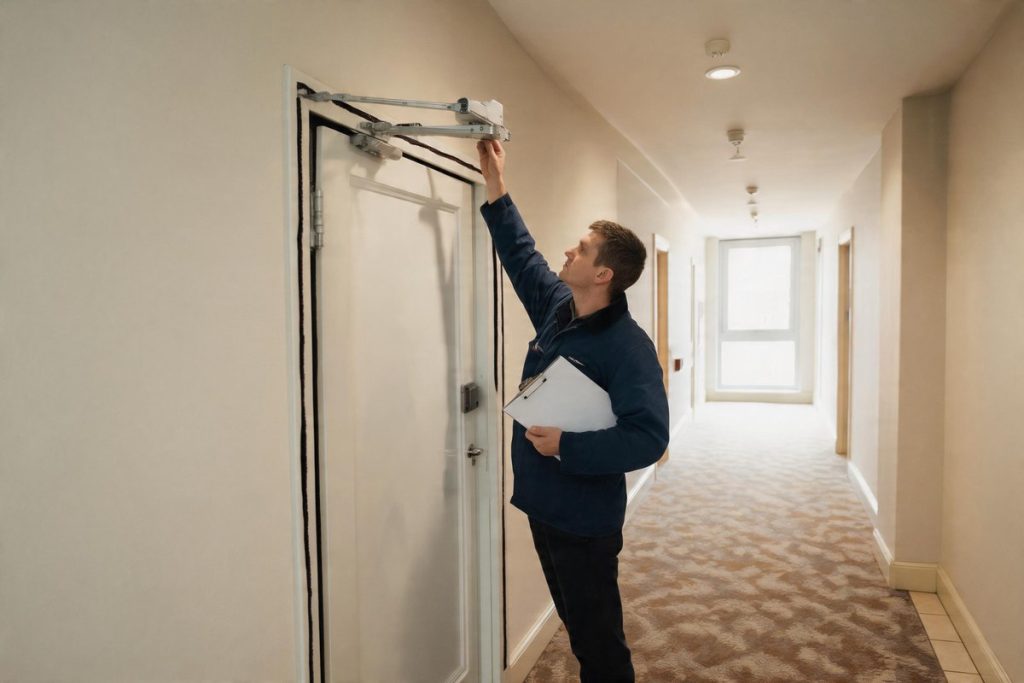
Fire Door Regulations UK: Checks, FD30 and the Law
Regulation 10 fire door checks, what FD30 and FD30S mean, how to check a fire door, and the failures that come up most often.
Nexis CPD Knowledge Bank — Health & Safety guides and explainers.
Regulation 10 fire door checks, what FD30 and FD30S mean, how to check a fire door, and the failures that come up most often.
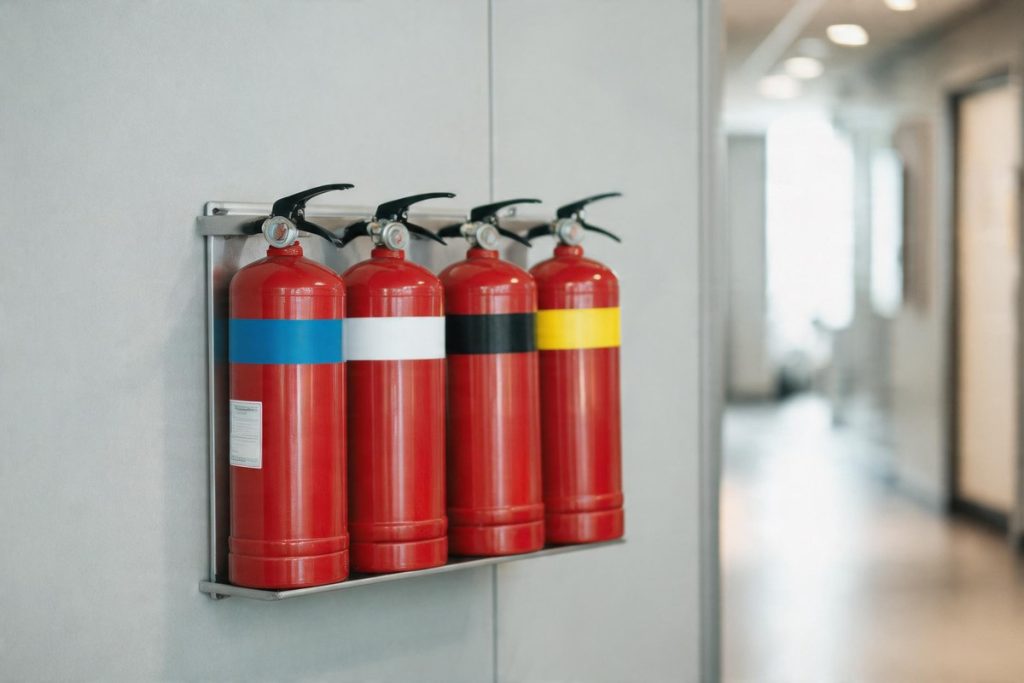
The five UK fire extinguisher types, their colour codes, the fire classes each is rated for, and which must never be used on electrical equipment.

The five steps of a fire risk assessment, who the responsible person is, and why a written record is now compulsory in England and Wales.

Abrasive wheels no longer have their own regulations — PUWER 1998 governs them, and only a trained competent person may mount a wheel. The hazards that actually cause injuries, what training must cover, and the seven checks that get skipped.

There is no legal requirement to have mental health first aiders — HSE considered adding mental health to the First-Aid Regulations and decided against it. What the law does require, what HSE actually recommends, what the MHFA England trademark means, and what the role really involves.
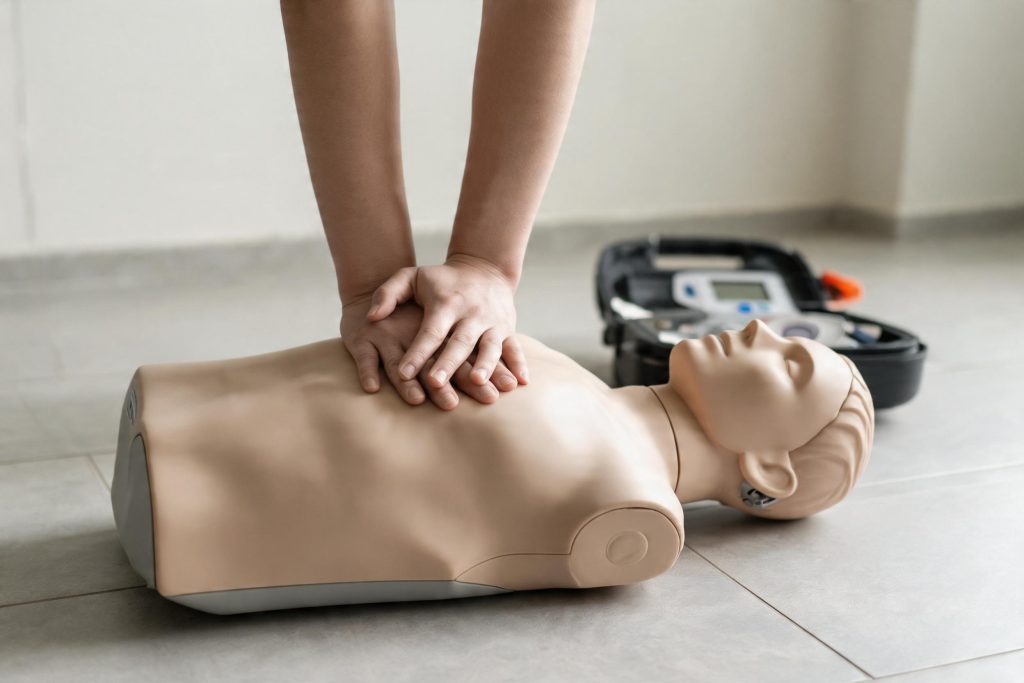
CPR does not restart a stopped heart — it buys time until a defibrillator arrives. What cardiac arrest is, why agonal gasping is missed, the compression depth and rate per Resuscitation Council UK, hands-only versus 30:2, and why an explainer is not training.
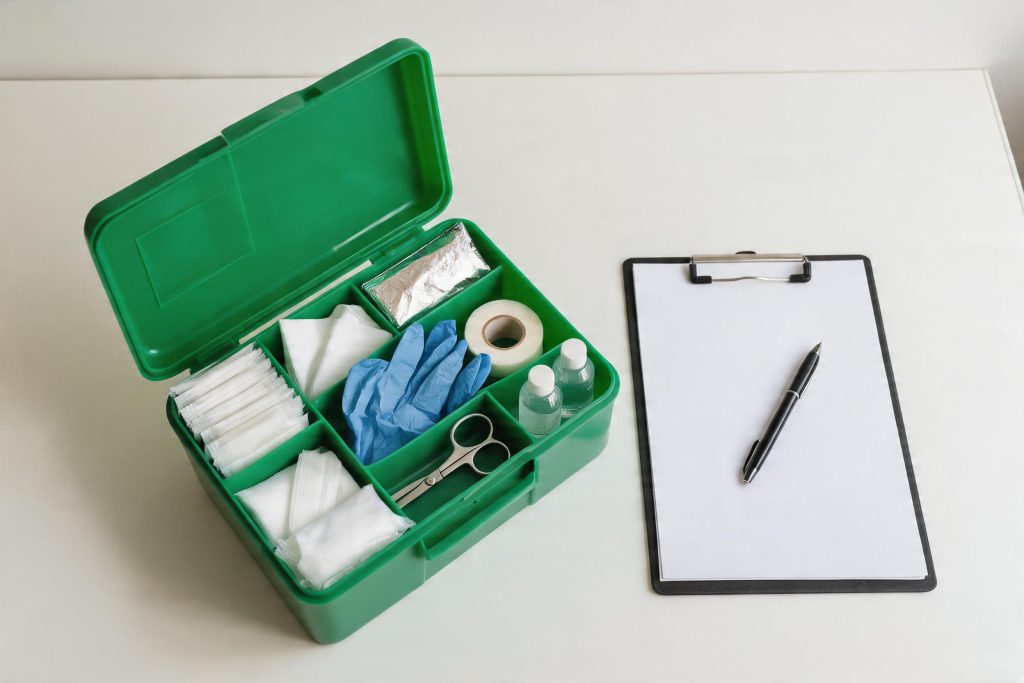
No single item is legally required in a workplace first aid kit. What the 1981 Regulations require is equipment that is adequate and appropriate. What BS 8599-1 covers, what must never be in the box, how many kits and where, and how often to check.
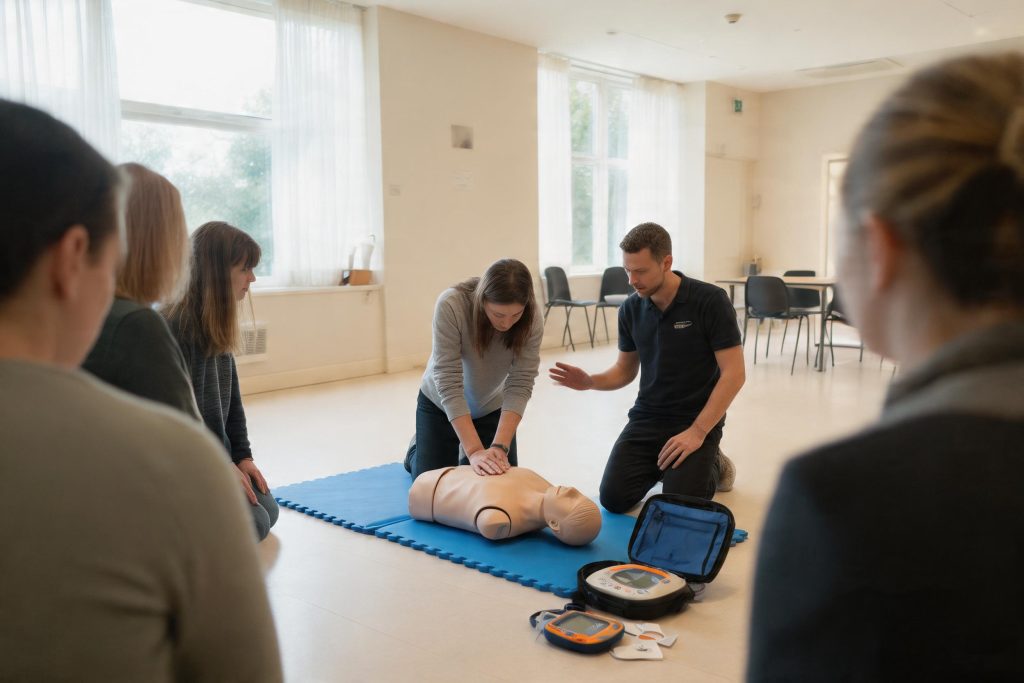
There is no such thing as ‘the’ first aid course. What you need follows from your workplace first-aid needs assessment. Appointed person vs EFAW vs FAW, what each covers, certificate validity and the 28-day trap, and the one thing you cannot get online.

A risk assessment is a decision, not a form. What Regulation 3 of MHSWR 1999 actually requires, the five steps, the hierarchy of control, what ‘suitable and sufficient’ means, and the seven ways risk assessments fail.

Praise-only feedback fails the sample. Here are 15 worked examples of assessor feedback across practical observation, written work and referrals — each one specific, developmental and tied to the criteria. Plus the four failures that turn good feedback into a sampling flag.